My Bathroom Feels Flat — Will a Backlit Mirror Add Depth?
If you’ve ever stepped into your bathroom and thought, “Something feels off,” you’re not alone. Many homeowners find that, despite careful selection of fixtures and finishes, their bathroom can feel flat or visually uninspired. One often overlooked element that can completely transform the spatial feel is the lighting around your mirror. Specifically, the backlighting effect in LED mirrors has become a popular solution for adding dimension and sophistication.
In this post, we’ll explore how LED mirrors—particularly those with backlit features—can replace traditional lighting like vanity light bars and sconces, the differences between backlighting, edge lighting, and in-glass light lines, and how the lighting interacts with different wall materials. We’ll also discuss practical tips for long vanity layouts where multiple mirrors come into play.
Why Does My Bathroom Feel Flat?
A "flat" bathroom often lacks contrast and depth, making the space feel smaller or less inviting. Sometimes, this comes down to how the walls are lit. Traditional fixtures like vanity bars and sconces tend to cast light in one direction, creating predictable shadows that don’t always highlight architectural or surface features.
Modern bathroom wall lighting approaches seek to break up this monotony by offering subtle layers of indirect illumination. According to sources such as Homedit and lighting experts at LED Mirror World, the introduction of LED backlit mirrors is a game-changer in achieving that layered and dimensional feel.
LED Mirrors Are Replacing Vanity Light Bars and Sconces
The rise of LED mirrors with integrated lighting means you don’t have to rely on the sometimes harsh or uneven glow of vanity light bars or wall sconces. These traditional sources often cast bluish or yellowish halos that can feel dated or unflattering in photos and real life alike.
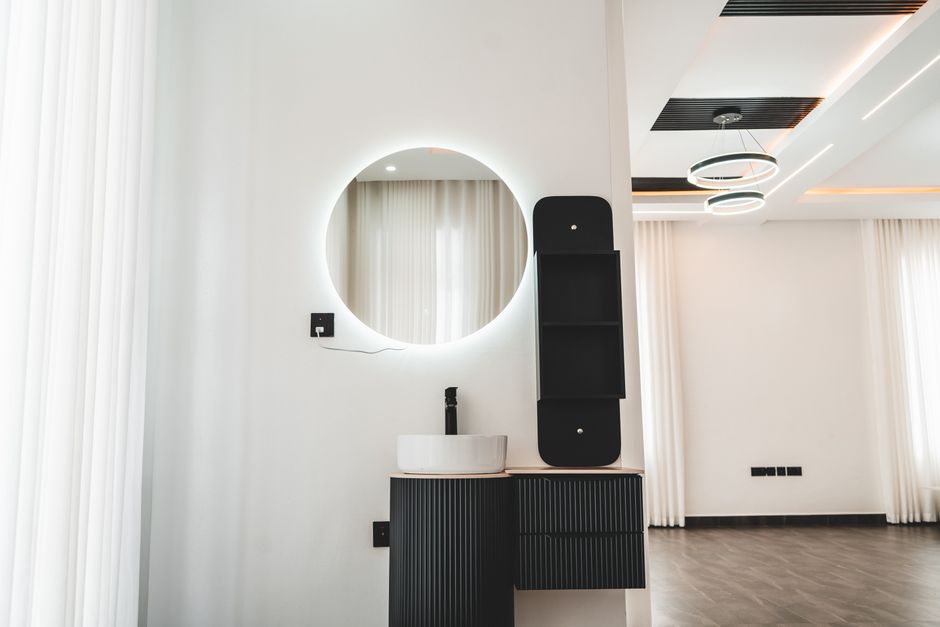

LED mirrors, by contrast, provide even, soft illumination that embraces the contours of your face and reflects light gently onto surrounding surfaces. Many manufacturers—like LED Mirror World—offer options that combine lighting and mirror functionality in minimalistic designs, streamlining your bathroom aesthetic.
Not only do these mirrors free up wall space previously dedicated to lighting fixtures, but they create a striking focal point. Instead of competing with décor or stone veining, these mirrors do the heavy lifting with ambient glow and shadow play.
Social Chatter: Sharing Your Bathroom Lighting Upgrade
Many homeowners share before-and-after images of bathroom lighting upgrades on Twitter and Facebook, highlighting the instant perception of depth added by backlit mirrors. These platforms are great tools for gathering ideas and crowd-sourced recommendations that emphasize real-world functionality over sterile showroom lighting.
Backlighting vs Edge Lighting vs In-Glass Light Lines
Understanding the different lighting techniques in LED mirrors helps choose the right effect for your space:
- Backlighting: LEDs placed behind the mirror cast a soft glow onto the wall surface. This creates a halo effect, subtly washing the paint, tile, wood, or stone behind the mirror and adding visual volume.
- Edge Lighting: LEDs embedded around the mirror’s edge shine through the glass, producing bright illumination focused on the mirror’s perimeter. This is more direct and may feel harsher without additional diffusion.
- In-Glass Light Lines: Thin LED strips embedded vertically or horizontally in the mirror’s face add a sculptural, modern touch but can visually compete with patterned stone or tile.
Among these, the backlighting effect is often the most versatile for creating depth. Light washes gently onto the adjacent wall material, revealing texture and subtle color shifts that might otherwise seem flat under harsh, direct lighting.
Why Wall Impact Matters
Wall Material Effect of Backlit Mirror Light Considerations Paint Soft, even glow highlights color depth and finish subtly (matte vs. satin) Choose wall color with light wash in mind to amplify or soften effect Tile Light reveals tile texture and allows grout lines occasional highlight Glossy tiles reflect backlight more dramatically, which can be too bright if overused Wood Underscores natural grain and warmth through gentle illumination Dark wood can absorb light, so higher lumen output may be necessary Stone Backlight reveals natural veining and dimensionality, enhancing premium feel Complex or busy veining needs simple mirror designs to avoid visual clashThese nuances underscore why lighting design cannot be separated from wall finish choice. A good backlit mirror will complement and enhance the material it shines on rather than compete or obscure it.
Long Vanity Layouts: Strategies for Multiple Mirrors
Bathrooms with long vanities often feature multiple mirrors or custom-sized options. Achieving consistent lighting across a span can be challenging but rewarding when done right.
- Mirror Separation: Proper spacing prevents visual clutter. Too close, and mirror lighting overlaps indistinctly; too far, and the wall between mirrors can feel disconnected.
- Uniform Backlighting: Choosing mirrors with similar backlit profiles ensures an even light wash along the vanity wall, unifying the space.
- Custom or Continuous Backlights: Some manufacturers offer continuous backlighting panels that stretch between mirrors. These can look like a floating light ribbon that ties the entire vanity together seamlessly.
- Dimmer Controls: Integrating dimmers enables mood modulation, which is particularly useful for longer walls to avoid overpowering brightness.
Many top bathroom design resources like Homedit highlight how these design choices draw the eye along the vanity rather than fixating on one spot, effectively counteracting flatness and increasing spatial depth.
Final Thoughts: Is a Backlit Mirror Right for You?
When your bathroom feels flat, a backlit mirror is often one of the most impactful upgrades you can make without expensive remodeling. By replacing traditional vanity light bars and sconces with a sleek, LED backlit mirror, you gain a modern feature that improves both form and function.
That said, the backlighting effect’s success largely depends on careful consideration of mirror separation, wall finish, and the lighting style you select—whether backlit, edge lit, or in-glass light lines. The angular bathroom mirror lighting should wash onto the adjacent surfaces to reveal texture and make the whole space feel lifted.
Before committing, it’s worth browsing specialized retailers like LED Mirror World for product choices and installation advice. Also, leverage social platforms like Twitter and Facebook to see how others have used backlit lighting in real bathroom settings.
With thoughtful selection and placement, your backlit mirror can do much more than illuminate your face—it can reshape the entire perception of your bathroom space.